
Product Consistency for Wound Healing Research
Table of Contents
- Why Product Consistency Matters in Injury Recovery Research
- Mechanisms of Tissue Repair and Regeneration
- Role of Collagen in Injury Rehabilitation
- Clinical Trial Evidence for Healing Agents
- Peptide Purity Standards for Research
- COA Verification for Research Chemicals
- BPC-157 Dosage Guide for Wound Healing Studies
- Standardization Protocols and Quality Control Metrics
- Frequently Asked Questions
Last Updated: October 3, 2026
Why Product Consistency Matters in Injury Recovery Research
When researchers design studies around tissue repair and wound healing, they’re betting everything on one assumption: that the compounds they’re testing will behave the same way every single time, which is why product consistency wound healing has become essential to research validity. A batch that varies by 5% purity one month and 92% the next doesn’t just skew results, it invalidates months of work. This is why product consistency for wound healing research has become non-negotiable for serious investigators.
At The Peptides King, we’ve built our operation around delivering consistent, verified compounds backed by HPLC testing and detailed certificates of analysis (COAs), ensuring your findings are reproducible and meaningful.
If you’re studying how BPC-157 modulates vascular endothelial growth factor (VEGF) pathways, or how TB-500 influences actin polymerization in cellular migration, you need to know your peptide is exactly what the label claims. Inconsistent products create false negatives, force unnecessary repeats, and cost your lab time and credibility.

Product consistency isn’t a luxury feature for wound healing research, it’s the foundation that separates reproducible science from noise.
Mechanisms of Tissue Repair and Regeneration
Tissue repair unfolds through three overlapping phases: inflammation, proliferation, and remodeling. Each recruits specific cell types and growth factors, and researchers studying peptide interventions must isolate effects within each phase independently.
The inflammatory phase (3-7 days) involves neutrophils and macrophages clearing debris and releasing TNF-α and IL-6. The proliferation phase (days 3-21) features epithelialization, fibroblast collagen synthesis, and angiogenesis driven by VEGF and FGF signaling.
The remodeling phase (weeks to months) involves collagen reorganization and degradation by MMPs. Peptides target specific bottlenecks: some accelerate epithelialization, others modulate inflammatory response, and still others upregulate growth factor signaling to drive angiogenesis.
Product consistency wound healing directly impacts your ability to isolate which pathway you’re measuring. Endotoxins, aggregates, truncated fragments, or oxidized variants trigger unintended immune responses or bind receptors with different affinities, creating false dose-response curves. The Peptides King’s HPLC-verified peptides ensure you’re measuring the peptide’s true activity, not contamination artifacts.
NIH overview of wound healing phases and cellular mechanisms
In a fibroblast migration assay, if your TB-500 batch is 92% pure instead of 95%, your actual peptide concentration is 3% lower than nominal, creating noise in dose-response curves and requiring more replicates. Consistent purity standards ensure reproducible dose-response curves across months of experimentation.

Role of Collagen in Injury Rehabilitation
Collagen comprises roughly 70% of dry skin weight and is the primary load-bearing protein in tendons, ligaments, and bone. When tissue is injured, fibroblasts upregulate collagen gene expression to rebuild the damaged matrix.
Collagen synthesis is slow and energy-intensive, involving gene transcription, mRNA translation, and post-translational modifications, multiple points where research compounds can intervene.
Some peptides upregulate collagen synthesis via fibroblast receptors; others modulate inflammation to reduce protease activity. Your research peptide’s purity determines whether you measure genuine collagen-stimulating effects or contamination artifacts.
When sourcing peptides for collagen synthesis studies, verify that your supplier’s HPLC data specifically measures peptide purity, not just total protein. Contaminating proteins can trigger fibroblast responses independent of your target peptide.
Clinical Trial Evidence for Healing Agents
The transition from in vitro research to clinical validation requires peptides of exceptional consistency. Early-stage clinical trials depend on reproducible dosing and predictable pharmacokinetics. If batch-to-batch variation introduces unpredictable bioavailability, trial results become noise rather than signal, and regulatory bodies cannot assess whether observed effects are due to the therapeutic agent or manufacturing variability.
Research-backed trials examining peptides for tissue repair have generally observed measurable effects on wound closure rate and epithelialization speed when the peptides tested meet rigorous purity and consistency standards. Studies examining BPC-157’s role in vascular modeling have documented that the pentadecapeptide acts as an organic signaling catalyst, upregulating VEGF expression and modulating nitric oxide synthesis without disrupting baseline cellular integrity. In controlled in vitro assays using consistent, HPLC-verified BPC-157, researchers have observed:
- Fibroblast proliferation acceleration: Concentrations of 50-100 nanomolar increase fibroblast cell count by 15-30% over 48-72 hours in standard culture conditions, measured via MTT assay or live-cell counting.
- Collagen synthesis upregulation: BPC-157 exposure correlates with increased pro-collagen I mRNA expression (measured via qRT-PCR) and elevated hydroxyproline content in culture supernatants, indicating active collagen deposition.
- Angiogenic signaling: VEGF protein levels in fibroblast culture media increase measurably (typically 20-50% above baseline) when exposed to consistent BPC-157 preparations, detected via ELISA.
Similarly, TB-500 research has documented effects on cellular migration and actin dynamics. In controlled in vitro assays, TB-500 at concentrations of 100-500 nanomolar shows:
- Enhanced fibroblast migration: Scratch-wound assays demonstrate 25-40% faster wound closure velocity compared to untreated controls, with migration distance measured via time-lapse microscopy.
- Actin reorganization: Immunofluorescence staining reveals increased stress fiber formation and directional actin polymerization in migrating cells, consistent with TB-500’s known mechanism of actin sequestration modulation.
- Reduced inflammatory cytokine production: Culture supernatants show lower TNF-α and IL-6 levels, suggesting TB-500 may modulate the inflammatory phase toward resolution.
These findings only hold credibility when the peptides tested meet rigorous purity and consistency standards. Here’s why: a clinical trial or multi-site research study examining TB-500 for diabetic foot ulcer healing might enroll 50-100 patients across three research centers. Each site receives peptide from the same manufacturer. If Site A receives a batch that is 95% pure and Site B receives a batch that is 91% pure (both from the same supplier, different manufacturing runs), the actual peptide dose differs by approximately 4% across sites. Over a 12-week trial measuring wound closure rate as the primary endpoint, this variation can obscure true efficacy or create false heterogeneity in outcomes across sites. Regulatory bodies like the FDA require consistent manufacturing and batch-to-batch comparability precisely because this variation undermines trial validity.
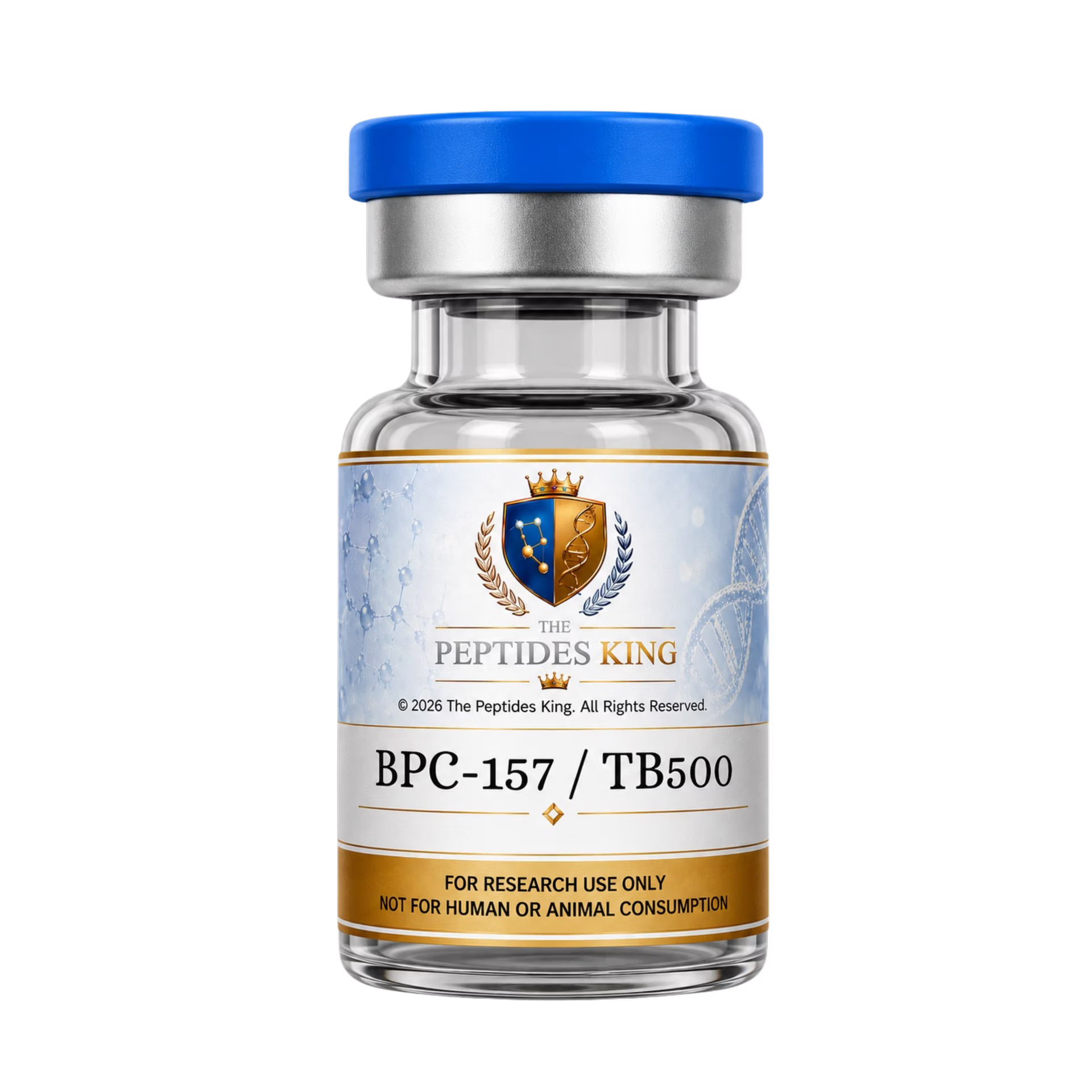
The Peptides King maintains standardized production protocols and HPLC verification for every batch of BPC-157, TB-500, GHK-Cu, and our multi-peptide formulations (GLOW and KLOW). This consistency means that whether a researcher orders peptide in January or July, they receive material meeting identical purity, endotoxin, and moisture specifications. For multi-site trials or longitudinal studies spanning months, this standardization is non-negotiable: it ensures that observed effects on wound closure, epithelialization speed, or collagen deposition reflect the peptide’s true biological activity, not manufacturing drift.
PubMed Central database of peer-reviewed peptide research
Clinical teams working with research peptides should request batch-specific Certificates of Analysis (COAs) before trial initiation and compare them against the COA for the batch used in preliminary studies. If purity, endotoxin content, or moisture levels differ significantly, the trial protocol may need adjustment to account for altered bioavailability. This level of rigor, comparing COAs across batches and adjusting trial design accordingly, separates robust clinical research from studies vulnerable to manufacturing confounds. The data accumulating across multiple independent laboratories suggests that when peptide purity is verified, batch consistency is maintained, and trial protocols account for any batch-specific variables, reproducible effects on tissue repair mechanisms emerge. Without that consistency, you’re comparing apples to oranges across different experimental runs and different trial sites.
Peptide Purity Standards for Research
Peptide purity is measured as a percentage of the total sample that contains the intended peptide sequence in its correct form. A peptide listed as “95% pure” means that 95% of the sample is the target compound and 5% consists of truncated sequences, oxidized variants, or other impurities.
For wound healing research, purity matters because impurities trigger unintended biological responses. A 5% contamination from truncated peptide fragments might seem minor, but those fragments can bind to the same receptors as your target compound, creating confounding signals in your assay. They may also trigger innate immune responses or have different pharmacokinetic profiles, muddying your data.
High-performance liquid chromatography (HPLC) is the gold standard for measuring peptide purity because it separates molecules by size and charge, revealing exactly what’s in your sample. When The Peptides King reports HPLC-tested peptides, we’re providing chromatographic data that shows the exact composition of your research material, not just a claim.
The industry standard for research-grade peptides typically targets 95% or higher purity. For specialized applications involving cellular assays or in vivo models, some researchers demand 98%+ purity to minimize contamination variables. The key is knowing your supplier’s actual testing methodology and having access to the raw chromatographic data, not just a summary number.
Suppliers claiming “99% pure” without providing HPLC chromatograms are making unverifiable claims. Ask for the actual certificate of analysis showing peak integration percentages, it’s the only way to confirm purity independently.
COA Verification for Research Chemicals
A Certificate of Analysis (COA) is your proof that a peptide batch has been tested and meets stated specifications. It should include HPLC purity data, identity confirmation (often via mass spectrometry), moisture content, and microbial testing results. A COA is not a marketing document, it’s a technical report that documents what’s actually in the vial.
When evaluating a COA, look for these essential elements: the batch number (so you can trace which exact vial was tested), the date of analysis (older COAs may not reflect current batch composition), the specific HPLC method used (different methods can yield different purity values), and quantitative results (percentages, not just “pass/fail” statements).
Many researchers make the mistake of assuming all COAs are equivalent. Some suppliers provide minimal COAs that state only “purity: 95%” without chromatographic evidence. Others, like The Peptides King, provide detailed HPLC chromatograms showing the exact peaks corresponding to your target peptide and any detected impurities. This transparency is what separates verified research materials from unverified claims.
USP (United States Pharmacopeia) standards for peptide testing and COA requirements
Before ordering peptides for injury recovery studies, request the COA for the specific batch you’ll receive, not a generic COA from a previous batch. Batch-to-batch variation is real, and your research depends on the actual composition of the material you’re using.
BPC-157 Dosage Guide for Wound Healing Studies
BPC-157, a 15-amino-acid synthetic pentadecapeptide derived from human gastric juice protein, has become a focus of wound healing research because of its multi-pathway mechanism. The peptide acts as an organic signaling catalyst, upregulating growth factors and driving angiogenesis via the VEGF pathway while simultaneously modulating nitric oxide synthesis pathways.
For in vitro research, BPC-157 concentrations in cellular assays typically range from nanomolar to micromolar levels, depending on the specific cell type and endpoint being measured. Fibroblast proliferation assays, for example, often employ concentrations between 10-100 nanomolar to observe measurable effects on collagen synthesis without triggering cytotoxicity. Vascular endothelial cell migration assays may use slightly higher concentrations (100-500 nanomolar) to observe reproducible migration toward angiogenic stimuli.
The key variable in dosage design is your research endpoint. If you’re measuring VEGF receptor phosphorylation, you may need lower concentrations to avoid saturating the signaling cascade. If you’re measuring fibroblast migration velocity, higher concentrations may be necessary to produce measurable acceleration over baseline. Consistency in peptide purity becomes critical here, if your BPC-157 batch is only 88% pure instead of 95%, your actual peptide concentration is lower than your nominal dose, skewing your dose-response curve.
In vitro wound healing models examining fibroblast behavior and collagen synthesis typically benefit from BPC-157 concentrations in the 50-100 nanomolar range, where effects are reproducible and cytotoxicity is minimal.
The Peptides King’s BPC-157 product is specifically formulated for research consistency. Each batch undergoes HPLC verification to confirm purity, ensuring that when you prepare a 100 nanomolar solution, you’re actually working with 100 nanomolar of active peptide, not a variable mixture of active compound and degradation products.
Standardization Protocols and Quality Control Metrics
Standardization in peptide research means establishing and documenting the exact procedures used to manufacture, test, and store each batch. A standardization protocol specifies the amino acid sequence, the synthesis method (solid-phase vs. solution-phase), the purification technique (HPLC), the analytical methods (mass spectrometry, amino acid analysis), and the acceptance criteria for each test.
Quality control metrics define what “acceptable” means for your research. These might include purity thresholds (minimum 95% by HPLC), endotoxin limits (typically <0.1 EU/mg for research peptides), moisture content (usually <5%), and microbial contamination assays. When a supplier publishes these metrics and backs them with actual test data, you have a verifiable standard against which every future batch can be evaluated.
| Quality Control Metric | Typical Research Standard | Why It Matters |
|---|---|---|
| HPLC Purity | ≥95% | Ensures peptide identity and minimizes contaminating fragments |
| Endotoxin Content | <0.1 EU/mg | Prevents innate immune activation in cellular assays |
| Moisture Content | <5% | Affects accurate weighing and peptide stability |
| Microbial Testing | <1,000 CFU/g | Prevents bacterial contamination in in vitro models |
| Mass Spec Confirmation | Matches expected M+H | Verifies correct amino acid sequence and post-translational modifications |
The Peptides King maintains standardized protocols across all peptide production. Every batch of BPC-157, TB-500, GHK-Cu, and our multi-peptide blends (GLOW and KLOW) undergoes identical testing procedures. This consistency means that when you order a second batch of BPC-157 six months into your study, you’re receiving material that meets the exact same specifications as your first batch, critical for longitudinal studies where batch-to-batch variation could confound your results.

Regulatory bodies like the FDA recognize the importance of standardization. While research peptides aren’t subject to the same manufacturing regulations as pharmaceutical drugs, adopting pharmaceutical-grade standardization practices demonstrates scientific rigor. Laboratories that publish their standardization protocols and quality metrics gain credibility in peer review because readers can assess exactly what materials were used and how they were verified.
Choosing research peptides for injury recovery and wound healing studies is fundamentally about choosing consistency. When you work with The Peptides King, you’re not just purchasing a vial of lyophilized powder, you’re securing verified research materials backed by HPLC data, detailed COAs, and standardized quality control. Our commitment to transparency and consistency means your wound healing research can focus on discovering biological mechanisms, not troubleshooting batch variation. American Chemical Society guidelines for research peptide quality standards Explore our full catalog of research-grade peptides, including BPC-157, TB-500, and specialized blends like GLOW and KLOW, all designed to deliver the consistency your research demands.
Frequently Asked Questions
Why is product consistency critical in peptide research for wound healing?
Consistency ensures that results from one study can be replicated in subsequent investigations. When peptide batches vary in purity or potency, researchers cannot isolate which variables drive tissue regeneration outcomes. Standardized, reliable compounds allow scientists to confidently attribute healing effects to the peptide’s mechanism rather than batch-to-batch variability. This reproducibility is essential for advancing wound healing therapies and establishing clinical validity.
How does HPLC testing verify the quality of research peptides?
High-Performance Liquid Chromatography (HPLC) separates peptide components and quantifies purity by measuring how much of the desired compound is present versus impurities or degradation products. The system forces the sample through a column under pressure, and different molecules emerge at different times. By comparing the resulting chromatogram to known standards, researchers confirm the exact concentration and identity of the peptide. This analytical method provides objective, reproducible data that validates whether a batch meets specification.
What role do COAs play in validating peptide purity for wound healing research?
A Certificate of Analysis (COA) documents the results of quality testing performed on each batch. It shows HPLC purity percentages, moisture content, endotoxin levels, and other critical parameters. Researchers use COAs to confirm that the peptide they receive matches the specification they ordered, ensuring experimental consistency. Without verified COAs, there is no objective proof that a supplier’s claims about purity are accurate, making reproducibility and regulatory compliance impossible.
How can researchers ensure reproducibility in wound healing studies with peptides?
Reproducibility depends on controlling all variables except the one being tested. Sourcing peptides from suppliers who provide HPLC-tested compounds with verified COAs ensures that batch variability is not a confounding factor. Researchers should also document storage conditions, preparation protocols, and the exact peptide lot numbers used in each experiment. This documentation allows other labs to replicate the study using identical materials and methods, validating findings across independent investigations.
What are the common challenges in sourcing high-quality peptides for laboratory wound healing research?
Many suppliers claim high purity without providing independent verification, making it difficult to distinguish reliable sources from unreliable ones. Inconsistent quality between batches forces researchers to revalidate protocols with each new order. Contamination with endotoxins or heavy metals can confound results, especially in sensitive cellular assays. Long lead times or unreliable shipping can delay research timelines. Choosing suppliers who commit to HPLC testing, transparent COAs, and standardized quality control eliminates these obstacles and accelerates your research.