
MOTS-c Peptide Research Results: What Studies Show
Last Updated: October 22, 2026
Quick Summary
MOTS-c peptide research focuses on a 16-amino acid mitochondrial-derived peptide that activates AMPK signaling and improves glucose tolerance, fat oxidation, and exercise capacity in animal models. However, human clinical evidence remains preliminary, with very few published trials and substantial gaps between animal findings and proven human outcomes.
- MOTS-c is a 16-amino acid peptide encoded in the mitochondrial genome that translocates to the nucleus under metabolic stress.
- The peptide activates AMPK signaling and NRF2 transcription factors, enhancing mitochondrial biogenesis and antioxidant defense.
- Animal studies show MOTS-c improves glucose tolerance, increases fat oxidation, and enhances exercise endurance.
- Human clinical trials remain limited in scope with sparse published results compared to extensive animal research.
- Long-term safety data in humans is extremely limited, with most studies spanning only weeks to months.
Table of Contents
- What MOTS-c Is and How It Works
- MOTS-c Peptide Mechanism of Action in Metabolic Regulation
- MOTS-c Peptide and Insulin Resistance: Research Findings
- Fat Metabolism and Body Composition in MOTS-c Research
- Exercise Capacity and Physical Performance Outcomes
- MOTS-c Human Clinical Trials: Current Status and Evidence
- MOTS-c Peptide Long-Term Effects and Research Limitations
- Using MOTS-c for Laboratory Research
- Frequently Asked Questions
What MOTS-c Is and How It Works
MOTS-c peptide research focuses on a 16-amino acid mitochondrial-derived peptide encoded within the mitochondrial genome, specifically within the 12S rRNA gene. This unique peptide has become a focal point for researchers investigating metabolic regulation, cellular stress response, and the aging process. Understanding what MOTS-c is requires examining both its molecular origin and its cellular function.
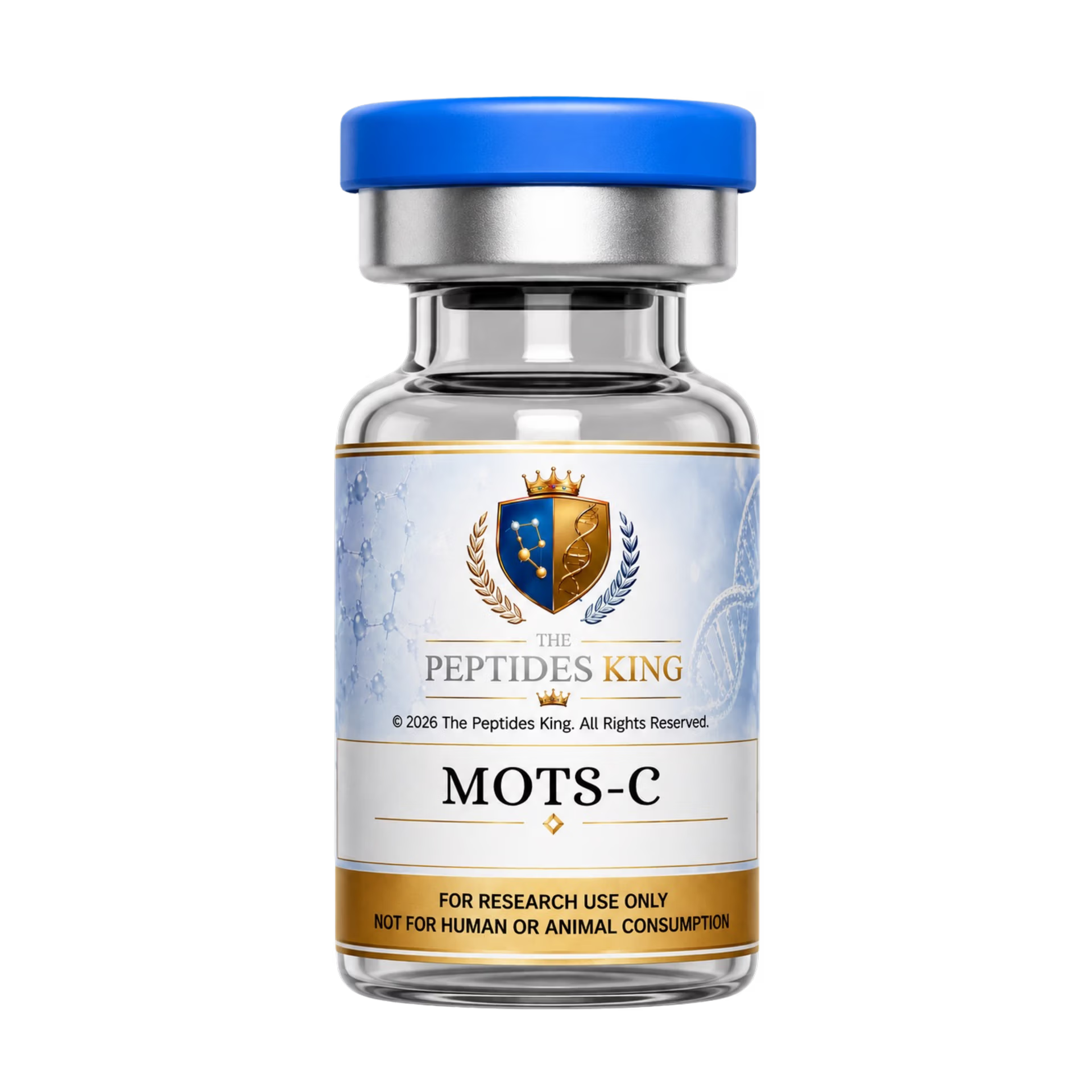
Mitochondrial Origin and Molecular Structure
The mitochondrial genome encodes far more than just the proteins traditionally associated with energy production. MOTS-c represents a class of signaling molecules called mitochondrial-derived peptides, which are generated from non-coding regions of mtDNA.
The peptide’s 16-amino acid structure gives it unique binding properties across multiple cellular pathways. Researchers use MOTS-c in laboratory settings to study how mitochondrial signals influence nuclear gene expression and metabolic homeostasis. When sourcing materials for these investigations, research peptides from verified suppliers ensure the high purity and consistency necessary for reliable results.
Nuclear Translocation and Cellular Stress Response
One of the most striking features of MOTS-c is its ability to translocate to the nucleus under metabolic stress conditions. This movement represents a direct communication pathway between mitochondria and the cell’s genetic control center.
This nuclear translocation mechanism is central to understanding how MOTS-c influences cellular outcomes. The peptide doesn’t simply boost energy production, it fundamentally alters how the cell responds to stress. Researchers studying aging, metabolic disease, and exercise adaptation have focused heavily on this mechanism because it represents a fundamental link between mitochondrial health and whole-body physiology.
MOTS-c Peptide Mechanism of Action in Metabolic Regulation
The mechanism by which MOTS-c exerts its effects involves activation of specific signaling pathways that control energy metabolism and cellular adaptation. This is where the science becomes particularly relevant for understanding why MOTS-c has attracted such intense research interest.

AMPK Signaling and NRF2 Activation
AMPK (AMP-activated protein kinase) is a master regulator of cellular energy metabolism. When MOTS-c enters the nucleus, it activates AMPK signaling, which triggers a cascade of metabolic adaptations. This activation increases the expression of genes involved in mitochondrial biogenesis and antioxidant defense.
The AMPK-NRF2 axis represents one of the most important metabolic control points in the cell. Activation of this pathway increases the expression of genes encoding antioxidant enzymes and mitochondrial proteins. For researchers studying metabolic health, MOTS-c provides a tool to investigate how mitochondrial signals can reprogram cellular energy handling at the genetic level.
Energy Homeostasis Under Metabolic Stress
When cells experience energy stress, whether from fasting, exercise, or nutrient deprivation, MOTS-c activation helps restore metabolic balance. The peptide promotes the expression of genes involved in glucose metabolism, fat oxidation, and ATP production. This response appears designed to help cells survive and adapt to challenging conditions.
The MOTS-c peptide mechanism represents an elegant solution to a fundamental biological problem: how do mitochondria communicate their energy status to the rest of the cell? By translocating to the nucleus and activating specific transcription factors, MOTS-c allows mitochondrial stress to trigger appropriate metabolic adjustments. This mechanism has profound implications for understanding how exercise, fasting, and metabolic disease alter cellular function.
MOTS-c Peptide and Insulin Resistance: Research Findings
Insulin resistance represents one of the most prevalent metabolic disorders, underlying both type 2 diabetes and metabolic syndrome. MOTS-c peptide research has identified potential roles for this peptide in improving glucose handling and insulin sensitivity.
Glucose Regulation and Metabolic Health
MOTS-c activation improves glucose tolerance through multiple mechanisms. The peptide enhances glucose uptake in muscle tissue and reduces hepatic glucose production. These effects occur through AMPK-dependent signaling that increases the expression of genes involved in glucose metabolism. In cell culture studies, MOTS-c exposure increases glucose consumption and improves insulin signaling responses.
The metabolic health benefits extend beyond glucose handling alone. MOTS-c activation increases mitochondrial biogenesis, which expands the cellular capacity for ATP production and reduces the accumulation of metabolic byproducts. This improved metabolic efficiency may explain why MOTS-c shows promise for addressing insulin resistance at the cellular level.
Animal Model Evidence
Research in mouse models has provided the strongest evidence for MOTS-c effects on glucose metabolism. Studies in aged mice show that MOTS-c treatment improves glucose tolerance and increases insulin sensitivity. These findings align with the peptide’s proposed mechanism of action through AMPK activation and improved mitochondrial function.
Animal research demonstrates that MOTS-c can improve metabolic parameters in the context of high-fat diet-induced obesity and aging-related metabolic decline. However, translating these findings to human physiology requires careful consideration of dose, duration, and individual variation. The gap between animal models and human outcomes remains substantial in MOTS-c research.
Fat Metabolism and Body Composition in MOTS-c Research
Fat metabolism represents another key area where MOTS-c research has focused. The peptide appears to influence how cells handle lipid storage and oxidation, with potential implications for body composition and metabolic health.
MOTS-c activation increases the expression of genes involved in fat oxidation and mitochondrial fatty acid metabolism. In cell culture and animal models, MOTS-c exposure shifts cellular metabolism toward increased fat burning. This effect occurs through AMPK-dependent mechanisms that enhance the oxidation of fatty acids for energy production.
Research in animal models suggests that MOTS-c may help prevent excessive fat accumulation and improve metabolic flexibility, the ability to switch between glucose and fat as fuel sources.
Exercise Capacity and Physical Performance Outcomes
The relationship between MOTS-c and exercise capacity has attracted considerable attention from researchers interested in aging and physical performance. The peptide’s role in metabolic adaptation makes it a logical target for studying exercise response.
MOTS-c activation enhances mitochondrial biogenesis and improves the capacity for aerobic energy production. In animal studies, MOTS-c treatment increases exercise endurance and improves physical performance metrics.
The exercise performance benefits observed in animal models suggest that MOTS-c influences the fundamental capacity for sustained physical activity. However, whether these findings translate to meaningful performance improvements in humans remains an open question.
MOTS-c Human Clinical Trials: Current Status and Evidence
The translation of MOTS-c from basic research to clinical application remains incomplete. Human studies lag far behind the extensive animal research, creating a significant gap in our understanding of the peptide’s real-world effects.
Published Human Studies and Trial Registry Data
Very few human studies of MOTS-c have been published in peer-reviewed journals. The existing human research is limited in scope and participant numbers compared to animal studies. Most human investigations remain in early phases, with limited data on efficacy, optimal dosing, or long-term safety.
Clinical trial registries show several MOTS-c studies in various stages of development, but the published results from these trials remain sparse. This represents a critical gap: while animal research suggests potential metabolic benefits, the human evidence base is substantially weaker. Researchers and potential users should recognize this disparity when evaluating MOTS-c claims.
Gaps Between Animal and Human Evidence
The translation from animal models to human physiology involves substantial uncertainty. Dose scaling, pharmacokinetics, and individual variation in response all differ between species. What produces clear metabolic benefits in mice may not translate to equivalent effects in humans.
Several factors explain the gap between animal and human evidence. Mouse studies typically use young, healthy animals in controlled environments, whereas human populations show far greater heterogeneity. Additionally, the timeframes for observing effects differ, animal studies can track changes over weeks, while human studies require much longer observation periods to detect meaningful outcomes.
| Study Type | Evidence Quality | Sample Size | Duration | Metabolic Outcomes |
|---|---|---|---|---|
| Mouse studies | Moderate | 10-30 per group | 4-12 weeks | Improved glucose tolerance, increased fat oxidation |
| Cell culture | High mechanistic | In vitro only | Hours to days | AMPK activation, gene expression changes |
| Human trials | Limited | 20-100 participants | 4-12 weeks | Preliminary data only |
| Observational human | Insufficient | Minimal | Variable | Sparse reporting |
MOTS-c Peptide Long-Term Effects and Research Limitations
Understanding the long-term effects of MOTS-c requires careful examination of both what research shows and what remains unknown. This distinction is critical for interpreting the available evidence.
Safety Profile and Adverse Event Data
Long-term safety data for MOTS-c in humans remains extremely limited. The few human studies that have been conducted typically span only weeks to months, providing minimal information about safety with extended use. Animal studies show generally favorable safety profiles with appropriate dosing, but animal safety data does not necessarily predict human outcomes.
Researchers conducting MOTS-c studies should document adverse events carefully and report them transparently. The absence of reported adverse events does not confirm safety, it may simply reflect limited observation periods and small sample sizes. For researchers using MOTS-c in laboratory settings, sourcing high-quality materials from established suppliers ensures product quality and purity for reliable research results.
Study Design Limitations and Conflicting Findings
MOTS-c research faces several methodological challenges. Many studies use non-physiological doses, short observation periods, or artificial conditions that may not reflect real-world biology.
The conflicting findings highlight important limitations in current MOTS-c research. Dose-response relationships remain poorly characterized. The optimal timing and duration of MOTS-c exposure for various outcomes has not been systematically determined.
These limitations do not invalidate MOTS-c research, they simply reflect the early stage of investigation. As research continues, these gaps should narrow. For now, interpreting MOTS-c findings requires acknowledging both the promising mechanistic evidence and the substantial uncertainty about real-world human effects.
Using MOTS-c for Laboratory Research
For researchers conducting MOTS-c studies, several practical considerations affect study quality and reproducibility. Peptide purity, storage conditions, and assay methodology all influence research outcomes.
Sourcing high-quality MOTS-c is fundamental to reliable research. HPLC testing confirms peptide purity and identity, while verified certificates of analysis document product quality.
Storage and handling protocols significantly affect peptide stability and activity. MOTS-c should be stored according to manufacturer recommendations, typically at low temperatures in appropriate buffer solutions.
When designing MOTS-c experiments, researchers should consider dose-response relationships, observation periods, and outcome measures carefully.
MOTS-c research represents an active and evolving field that bridges mitochondrial biology, metabolic regulation, and aging research.
Frequently Asked Questions
What do MOTS-c peptide studies show about metabolic health?
MOTS-c research demonstrates effects on metabolic regulation through activation of the AMPK signaling axis and nuclear translocation under metabolic stress. Animal studies indicate the peptide influences glucose regulation, energy metabolism, and fat metabolism pathways. However, most published evidence comes from preclinical models and in vitro assays. Human clinical trial data remains limited, so translating these findings to human outcomes requires ongoing research and careful interpretation of study limitations.
Has MOTS-c been studied in human clinical trials?
MOTS-c human clinical trials remain in early stages. Published human studies are sparse compared to the extensive animal research available. Most evidence derives from mouse models and cell-based assays examining mitochondrial-derived peptide behavior under controlled conditions. Researchers continue to evaluate safety and efficacy in human subjects, but definitive clinical-trial data establishing human benefit is not yet established in peer-reviewed literature.
What are the main limitations of current MOTS-c research?
Key research limitations include reliance on animal models that may not translate directly to humans, limited sample sizes in available human studies, short-term follow-up periods in most trials, and lack of standardized dosing protocols across studies. Additionally, many findings focus on specific cellular pathways or tissue types, making it difficult to predict whole-body effects. Conflicting results across studies and variation in study design also complicate interpretation of overall efficacy and safety.
Where can researchers source high-quality MOTS-c for laboratory studies?
The Peptides King supplies HPLC-tested MOTS-c peptides for research purposes, available at $70.00 per vial. Our products include verified Certificates of Analysis (COAs) to ensure purity and consistency for your laboratory work. As a 16-amino acid mitochondrial-derived peptide, MOTS-c from The Peptides King is designed for in vitro analysis of metabolic regulation, nuclear translocation, and cellular stress adaptation in controlled research environments.