
BPC-157 Dosage Guide: Steps for Research
Table of Contents
- What Is BPC-157 and Why Dosage Matters
- Standard BPC-157 Dosage Ranges for Research
- BPC-157 Reconstitution Guide: Calculation and Preparation
- Administration Methods: Subcutaneous vs. Oral
- BPC-157 Research Cycle Length and Injection Frequency
- How to Read a Peptide Certificate of Analysis
- Safety, Side Effects, and Drug-Drug Interactions
- Post-Cycle Management and Storage Stability
Last Updated: August 27, 2026
What Is BPC-157 and Why Dosage Matters
BPC-157 is a synthetic pentadecapeptide composed of 15 amino acids derived from a protective compound found in gastric juice (peer-reviewed research). Understanding proper BPC-157 dosage is essential for researchers because this peptide’s effects are dose-dependent, and precision in measurement directly impacts research outcomes and consistency across experimental protocols.

At The Peptides King, we are committed to delivering products defined by consistency, transparency, and reliability to support your scientific endeavors. Dosage matters because reproducibility depends on it, a 10-microgram dose is fundamentally different from a 100-microgram dose in terms of effect magnitude and tissue response.
Standard BPC-157 Dosage Ranges for Research
Research protocols typically employ BPC-157 between 100 micrograms and 10 milligrams per administration, depending on the research model and delivery method (peer-reviewed research). Most laboratory studies center around 500 micrograms to 2 milligrams per dose for systemic effects, while localized administration often uses lower concentrations at the injection site.
Subcutaneous administration in animal models frequently uses 10 micrograms per kilogram of body weight, translating to roughly 500 micrograms to 1 milligram for standard laboratory rodents. Oral administration typically employs higher absolute doses, often 5 to 10 milligrams, because oral bioavailability is lower than parenteral routes.
A critical distinction exists between acute dosing (single administration for immediate response measurement) and chronic dosing (repeated administration over days or weeks). Most research suggests that escalating doses beyond 2 milligrams per administration does not produce proportionally greater effects, indicating a plateau in dose-response curves.
Document your chosen dose in both absolute micrograms and as a concentration per kilogram of body weight if using animal models. This allows other researchers to replicate your work and compare results across studies.
BPC-157 Reconstitution Guide: Calculation and Preparation
Reconstitution is where theory meets practice. Most BPC-157 arrives as lyophilized powder in a vial, and your first task is dissolving it into a usable liquid form.
Reconstitution Math and Micrograms Per Unit
A typical BPC-157 vial contains 5 milligrams of powder. To create a usable concentration, you’ll add bacteriostatic water, a sterile, non-pyrogenic water containing benzyl alcohol as a preservative, to reach your target concentration.
Step 1: Determine your target concentration. A common choice is 250 micrograms per milliliter (0.25 mg/mL), balancing ease of measurement with practical syringe volumes.
Step 2: Calculate the volume of bacteriostatic water needed.
Volume of water (mL) = Total peptide (mg) ÷ Target concentration (mg/mL)
For a 5 mg vial at 250 mcg/mL:
Volume = 5 mg ÷ 0.25 mg/mL = 20 mL
Step 3: Verify your math. After reconstitution, each milliliter contains 250 micrograms. Drawing 1 mL yields 250 micrograms; 2 mL yields 500 micrograms.

Common concentration targets and their water volumes (for 5 mg vials):
- 100 mcg/mL = 50 mL water
- 250 mcg/mL = 20 mL water
- 500 mcg/mL = 10 mL water
- 1000 mcg/mL (1 mg/mL) = 5 mL water
Higher concentrations require less water but are harder to measure accurately. Lower concentrations are easier to measure but require larger injection volumes for higher absolute doses.
The powder itself displaces roughly 1-2 mL. If your calculation says “add 20 mL” but you physically add 20 mL to a vial containing powder, you’ll end up with approximately 21-22 mL total volume, diluting your concentration below target. Account for this by adding slightly less water or accepting a minor deviation in final concentration.
Using Bacteriostatic Water and Insulin Syringes
Bacteriostatic water is the standard reconstitution medium for peptide research. It contains 0.9% sodium chloride and 0.9% benzyl alcohol, preserving sterility over time and allowing your reconstituted solution to remain viable for several weeks when stored properly. Never use sterile water for injection (SWFI) alone for long-term storage; it lacks preservative and becomes a contamination risk within days.
For measurement, insulin syringes are the practical choice. A standard U-100 insulin syringe holds 1 milliliter with 100 unit markings, each unit representing 0.01 mL. To draw 250 micrograms from a 250 mcg/mL solution, draw to the 10-unit mark (0.1 mL).
| Concentration | Volume for 250 mcg | Volume for 500 mcg | Volume for 1000 mcg |
|---|---|---|---|
| 100 mcg/mL | 2.5 mL | 5 mL | 10 mL |
| 250 mcg/mL | 1 mL | 2 mL | 4 mL |
| 500 mcg/mL | 0.5 mL | 1 mL | 2 mL |
| 1000 mcg/mL | 0.25 mL | 0.5 mL | 1 mL |
Choosing 250 or 500 mcg/mL concentrations keeps injection volumes practical, between 0.5 and 4 mL, within the comfortable range of standard insulin syringes.
Administration Methods: Subcutaneous vs. Oral
Two primary administration routes dominate BPC-157 research: subcutaneous injection and oral administration, each offering distinct advantages for different experimental designs.
Subcutaneous injection delivers the peptide directly into the tissue layer beneath the skin, bypassing the gastrointestinal tract and ensuring high bioavailability. Using an insulin syringe, inject your reconstituted solution into the abdomen, flank, or back of the neck. Rotate injection sites to prevent tissue irritation. Subcutaneous administration typically produces effects within hours and maintains therapeutic levels for 12 to 24 hours, depending on dose and metabolism.

Oral administration leverages BPC-157’s resistance to gastric degradation, a unique property among peptides. When taken orally, the peptide survives stomach acid and is absorbed through the intestinal mucosa, offering a non-invasive approach for long-term studies. However, oral bioavailability is substantially lower than subcutaneous, requiring doses 5 to 10 times higher to achieve equivalent systemic effects. Food intake, gastric pH, and individual absorption differences introduce variability, making oral protocols less suitable for studies requiring tight dose control.
Subcutaneous injection provides superior bioavailability and reproducibility; oral administration offers non-invasive long-term administration at the cost of lower and more variable systemic levels.
BPC-157 Research Cycle Length and Injection Frequency
A research cycle refers to the complete duration of your experimental protocol, from first administration to final measurement. Most acute studies employ a single injection followed by measurements over 24 to 72 hours. Chronic protocols extend over days or weeks with repeated administrations, typically running 14 to 28 days with injections every 24 hours (daily) or every 48 hours (every other day).
The half-life of BPC-157 in systemic circulation is estimated at 4 to 6 hours (peer-reviewed research). After 12 to 24 hours, minimal original peptide remains, explaining why daily or every-other-day dosing is common.
| Cycle Type | Duration | Frequency | Typical Dose | Research Goal |
|---|---|---|---|---|
| Acute | 24-72 hours | Single dose | 500 mcg-2 mg | Immediate response |
| Short-term | 7-14 days | Daily | 250-500 mcg | Early adaptive response |
| Standard | 14-28 days | Daily or every other day | 500 mcg-1 mg | Tissue remodeling effects |
| Extended | 28-56 days | Every other day | 500 mcg-1 mg | Long-term tolerance and cumulative effects |
Continue measurements for 7 to 14 days after the final injection to capture the decay phase and reveal important information about tissue adaptation and recovery.
How to Read a Peptide Certificate of Analysis
Your peptide supplier should provide a Certificate of Analysis (COA) with every batch. This document verifies that the compound you received matches its specification.
A COA typically includes:
Batch/Lot Number: A unique identifier linking this specific batch to your supplier’s records.
Purity Percentage: Usually expressed as HPLC purity (High Performance Liquid Chromatography). A typical specification is 98% or higher.
Molecular Weight: Confirms the compound is actually BPC-157. BPC-157 has a molecular weight of approximately 1,502 Daltons.
Water Content (Karl Fischer Titration): Expressed as a percentage. Lyophilized peptides typically contain 1 to 5% residual water.
Endotoxin Testing (if provided): Measured in Endotoxin Units per milligram (EU/mg). For research-grade peptides, values below 0.1 EU/mg are typical.
Heavy Metals Testing (if provided): Confirms absence of lead, cadmium, mercury, and other toxic metals.
HPLC Chromatogram: A graph showing the purity profile. A single, sharp peak indicates high purity; multiple peaks suggest impurities or degradation.
When evaluating suppliers, request their COA format and review it carefully. Red flags include missing data, vague descriptions, or refusal to provide detailed testing. Research peptides from reputable sources ensures your experimental materials meet rigorous standards and come with comprehensive documentation. The Peptides King provides HPLC-tested compounds with verified COAs, ensuring researchers receive high-quality materials.
A practical checklist when you receive a COA:
- Batch number is recorded in your lab notebook
- HPLC purity is 98% or higher
- Molecular weight matches BPC-157 (approximately 1,502 Da)
- Water content is below 5%
- Endotoxin is below 0.1 EU/mg (if tested)
- Heavy metals are not detected (if tested)
- HPLC chromatogram shows a single major peak
Request COAs in PDF format and maintain a digital archive indexed by batch number. This documentation protects your research integrity and provides evidence of due diligence about your experimental materials.
Safety, Side Effects, and Drug-Drug Interactions
Safety in peptide research requires understanding both the peptide’s intrinsic properties and the risks introduced by your administration method. BPC-157 has shown a favorable safety profile in published research, with most studies reporting minimal adverse effects even at doses substantially higher than typical research protocols.
Local injection site effects are the most frequent concern. Subcutaneous injection can produce temporary redness, mild swelling, or discomfort at the injection site, typically resolving within hours to days. Rotating injection sites and using sterile technique eliminates most local complications. Systemic effects are rare at research-standard doses below 2 milligrams per administration.
Drug-drug interactions: BPC-157 does not appear to inhibit or induce major hepatic cytochrome P450 enzymes, suggesting low interaction potential with most pharmaceuticals. If your research involves co-administering BPC-157 with other compounds, consider:
-
NSAIDs: BPC-157 itself has anti-inflammatory properties. Combining it with NSAIDs may produce additive effects. Separate administration timing by at least 2 to 4 hours if both are necessary.
-
Anticoagulants: Limited evidence suggests BPC-157 may have mild anticoagulant properties. If your protocol includes anticoagulants, monitor for unexpected bleeding and adjust doses conservatively.
-
Immunosuppressants: BPC-157’s immunomodulatory effects are not fully characterized. Co-administration with immunosuppressive agents requires careful monitoring.
-
Other peptides: Stacking BPC-157 with other peptides in blended formulations is common in research. These combinations generally show additive or synergistic effects without antagonism.
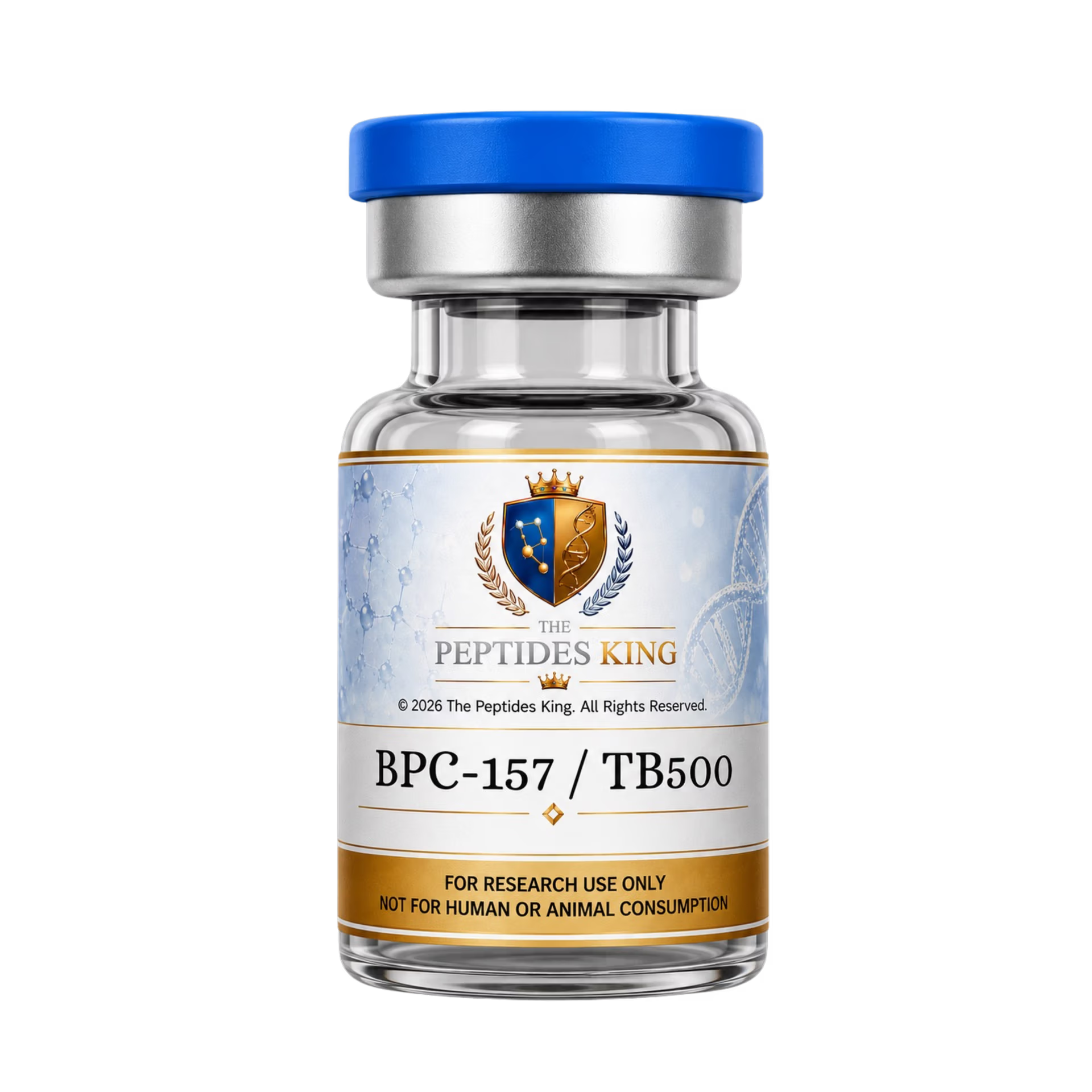
BPC-157/TB500
Improperly stored BPC-157 degrades rapidly. Reconstituted solutions stored at room temperature lose potency within days; refrigerated solutions remain stable for 2 to 4 weeks; frozen solutions (-20°C or colder) maintain stability for months. Contamination during reconstitution or administration is the primary safety concern. Use sterile technique consistently: alcohol swabs for vial tops, sterile needles for each injection, and clean injection sites.
Never reuse needles. Each injection should use a fresh, sterile needle. Reusing needles introduces bacteria, dulls the needle tip, and risks cross-contamination. The cost of sterile needles is negligible compared to the risk of compromised research data or infection.
Post-Cycle Management and Storage Stability
What you do after your research cycle ends determines whether your data remains valid and whether your remaining peptide remains usable for future studies.
Post-cycle observation period: Most protocols include 7 to 14 days of continued measurement after the final injection. This window captures the decay phase and reveals whether tissue response persists, markers return to baseline, or rebound effects occur. Document this post-cycle period as rigorously as your active dosing phase.
Reconstituted solution storage:
Refrigerated (2-8°C): Reconstituted BPC-157 in bacteriostatic water remains stable for 2 to 4 weeks. Store in an airtight container away from light. Before each use, inspect visually for cloudiness or particles.
Frozen (-20°C): Freezing extends stability to 3 to 6 months. Thaw at room temperature before use; do not heat or microwave. After thawing, use the solution within 24 hours. Do not refreeze.
Ultra-low freezer (-80°C): For long-term archival, ultra-low freezing preserves BPC-157 for 12 months or longer.
Lyophilized powder storage:
Unopened vials: Store at room temperature (15-25°C) in a dry location away from light. Properly sealed lyophilized peptides remain stable for 1 to 2 years.
Opened vials: Once reconstituted, follow refrigeration or freezing guidelines.
Stability indicators:
A reconstituted solution that has degraded may show cloudiness, discoloration, unusual odor, or visible particles. Any of these signs warrant discarding the solution.
Documentation for traceability:
Maintain a simple log for each batch:
- Batch/lot number
- Reconstitution date and concentration
- Storage location and temperature
- Usage dates and amounts
- Observations about appearance or stability
Precise dosing and careful handling of BPC-157 are foundational to reliable research. The calculations, administration techniques, and storage protocols outlined here reflect standard laboratory practice proven through thousands of research cycles. When you invest in quality peptides from a supplier that provides HPLC-tested verification and detailed COAs, you’re protecting the integrity of your entire experimental design. Start with a clear protocol, execute with attention to detail, and your data will reflect the true properties of the compound.
Frequently Asked Questions
What is the standard concentration for BPC-157 in research settings?
BPC-157 research applications typically use concentrations ranging from 5 to 10 mcg per kilogram of body weight, administered via subcutaneous injection. Laboratory studies often employ 250 to 500 mcg per administration for localized tissue repair research. Dosage titration depends on the specific research protocol and therapeutic window being evaluated. The Peptides King provides HPLC-tested BPC-157 with verified COAs to ensure accurate concentration verification for your research applications.
How should BPC-157 be stored to maintain compound integrity?
BPC-157 powder should be stored in a cool, dark environment between 2-8°C (refrigerated) to preserve stability. Once reconstituted with bacteriostatic water, the solution remains stable for approximately 30 days under proper refrigeration. Avoid repeated freeze-thaw cycles, as these degrade the peptide structure. Store away from direct sunlight and maintain consistent temperature to prevent degradation of the amino acid sequence. Always verify storage conditions on your supplier's documentation.
What are the common administration methods for BPC-157 in laboratory studies?
BPC-157 administration routes include subcutaneous injection (most common for localized effects), intramuscular injection, and oral administration. Subcutaneous injection using an insulin syringe provides precise micrograms dosing and targeted tissue delivery. Oral administration has lower bioavailability due to gastric stability challenges, though the peptide's gastric origin suggests some resistance to stomach acid. Research protocols typically select administration routes based on whether systemic or localized effects are desired for the study.
How does HPLC testing verify the quality of BPC-157?
High-Performance Liquid Chromatography (HPLC) separates BPC-157 molecules by their chemical properties, measuring purity percentage and identifying contaminants or degradation products. The test confirms that your peptide matches the claimed amino acid sequence and concentration listed on the certificate of analysis. A verified COA from HPLC testing demonstrates that the compound meets research-grade standards. The Peptides King provides HPLC-tested products with documented COAs to ensure transparency and compound integrity for your laboratory work.
This article was written using GrandRanker